
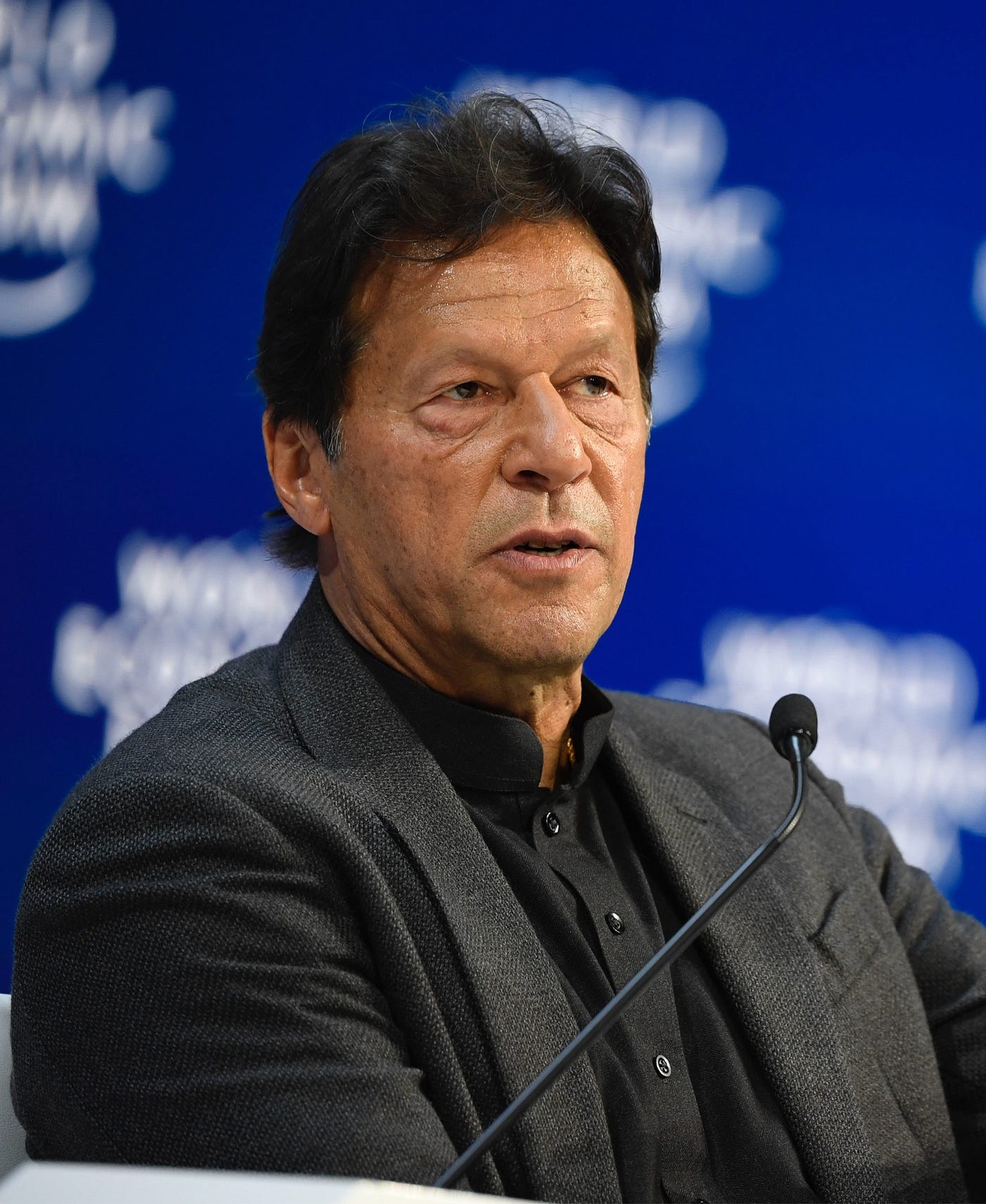
Most popular leader in the world & Pakistan imran khan 2008 – 2026

Early Life & Cricket Career
- Birth & Background: Imran Khan was born on 5 October 1952 in Lahore into an affluent family. Encyclopedia Britannica+1
- Education: He studied at elite institutions in Pakistan and in the UK, including the Royal Grammar School in Worcester and later read Philosophy, Politics and Economics at Keble College, Oxford. Encyclopedia Britannica+1
- Cricket Career:
- He made his debut for Pakistan’s national cricket team in 1971, though his permanent place came after graduating from Oxford in 1976. Encyclopedia Britannica+1
- By the early 1980s, he was captain of the team. Encyclopedia Britannica+1
- His crowning achievement: leading Pakistan to victory in the 1992 Cricket World Cup — Pakistan’s first (and so far only) World Cup win. This cemented his status as a national hero. Encyclopedia Britannica+2Pakistan+2
- He retired from international cricket in 1992. Encyclopedia Britannica+1
- Public Image Shift: After retirement, he underwent a transformation — from a glamorous, internationally recognized sports star to a more sober-minded figure, focusing on philanthropy and public welfare. Encyclopedia Britannica+1
Philanthropy and Social Work
After leaving cricket, Imran Khan turned much of his attention towards social welfare:
- In 1994, he founded Shaukat Khanum Memorial Cancer Hospital & Research Centre in Lahore, named after his mother, who died of cancer. The hospital was funded via a groundswell of donations — reportedly about US $25 million — reflecting Khan’s ability to mobilize both national and international support. Encyclopedia Britannica+2DNA Pakistan+2
- The hospital became a landmark institution in Pakistan, offering cancer treatment and care, often for patients who could not afford it — highlighting Khan’s commitment to alleviate suffering. Pakistan+2DNA Pakistan+2
- Beyond healthcare, he ventured into education: founding Namal Institute (originally Namal University), giving students — especially from rural or underprivileged backgrounds — access to higher education and opportunities. Pakistan Times+2Vocal+2
These moves — from charity hospital to education — helped shape his image as a leader concerned with social justice, public service, and uplifting the underprivileged. DNA Pakistan+2Vocal+2
Political Career & Rise of PTI
- In 1996, Khan founded his own political party: Pakistan Tehreek-e-Insaf (PTI), driven by ideals of justice, accountability and anti-corruption. Business Standard+2Vocal+2
- Early years were tough: in the 1997 national elections PTI got less than 1% votes and won no seats. But over time, Khan’s message — especially among youth — started gaining traction. Encyclopedia Britannica+2Business Standard+2
- In 2002 Khan won a seat in the National Assembly. Business Standard+1
- Through the 2010s PTI steadily grew: massive public rallies, increasing visibility — a milestone was the 2011 mass rally at Minar-e-Pakistan, which many consider the turning point that made PTI a serious national force. Wikipedia+2Business Standard+2
- In the 2018 general elections, PTI won a plurality of seats, enabling Khan to form a coalition and become Prime Minister on 18 August 2018. Business Standard+2Encyclopedia Britannica+2
His political ascent rested on promises of ending corruption, delivering social welfare, and reimagining Pakistan’s future — which resonated widely across segments of the population.
As Prime Minister (2018–2022): Policies, Achievements & Challenges
During his premiership, Imran Khan sought to implement reformist and populist policies. Some major aspects:
- Governance & Foreign Policy: His government sought to balance relationships globally — navigating between traditional alliances and emerging regional priorities. imrankhan.com.pk+2Business Standard+2
- Security & Militancy: Under his watch, there was renewed emphasis on counterterrorism and internal security, especially after regional instability — though critics debate the effectiveness and consequences. Encyclopedia Britannica+1
- Economic Strain: Khan inherited a problematic economic situation: debt, balance-of-payments issues, and structural weaknesses. Early optimism was overshadowed by macroeconomic crises. Encyclopedia Britannica+1
- Pandemic Response: The outbreak of COVID-19 posed a huge challenge. His government initially delayed full lockdowns, but later imposed restrictions in high-infection areas. Encyclopedia Britannica+1
Despite efforts, many deep-rooted structural problems — economic, political, regional tensions — persisted. Critics argue that while some reforms were initiated, long-term stability and systemic change remained elusive. Encyclopedia Britannica+2Business Standard+2
Removal from Power, Downfall & Legal Troubles
- On 10 April 2022, Imran Khan was removed from office via a parliamentary no-confidence vote — the first time a sitting Pakistani prime minister was removed that way.
- After his removal, political turbulence followed: allegations of corruption, misuse of authority, and controversies around state gifts and assets began mounting.
- In November 2022, during a protest march (Azadi March II), Khan was seriously wounded in an assassination attempt in Wazirabad — several others injured, one supporter killed.
- In 2023, he was arrested by paramilitary forces — a dramatic moment that triggered large-scale protests by his party supporters. Encyclopedia Britannica+2Business Standard+2
- He faced dozens of corruption, security, and other cases — and was convicted in several. Over time, these legal issues became a central part of his post-premiership life. Encyclopedia Britannica+2Business Standard+2
So far, his legal travails have overshadowed — for many — both his political and philanthropic legacy.
Writings & Public Image
- Imran Khan is also an author. Notably: Warrior Race: A Journey Through the Land of the Tribal Pathans (1993) — reflecting his roots and interest in social history and identity. Encyclopedia Britannica+1
- Another work: Pakistan: A Personal History (2011), in which he offers his personal narrative and vision for Pakistan’s future. Encyclopedia Britannica+1
- His life has often been described as a dramatic arc: from celebrated sports hero to nation’s prime minister, then a polarizing political figure under legal and institutional pressure. Many admire his philanthropic and reformist ambitions; others critique the controversies surrounding his rulings and later fallout.
Why Imran Khan Matters (and Remains Controversial)
- For many Pakistanis — especially youth and supporters of reform — Khan symbolized hope: a self-made figure promising justice, accountability, and upliftment via social welfare, education, and healthcare.
- His cricket legacy gives him unique mass appeal and credibility; few politicians in Pakistan carry such cross-generational recognition or emotional resonance.
- On the flip side, his political career — successes and failures — reflect the difficulties of transforming deep structural issues (economy, governance, security) even with goodwill and popular support.
- His current legal battles, imprisonment, and polarization around his legacy keep him central to national discourse — meaning debates about him are also debates about Pakistan’s political future, democratic institutions, and civil-military relations.